 Intermediate
The Science of Restoration
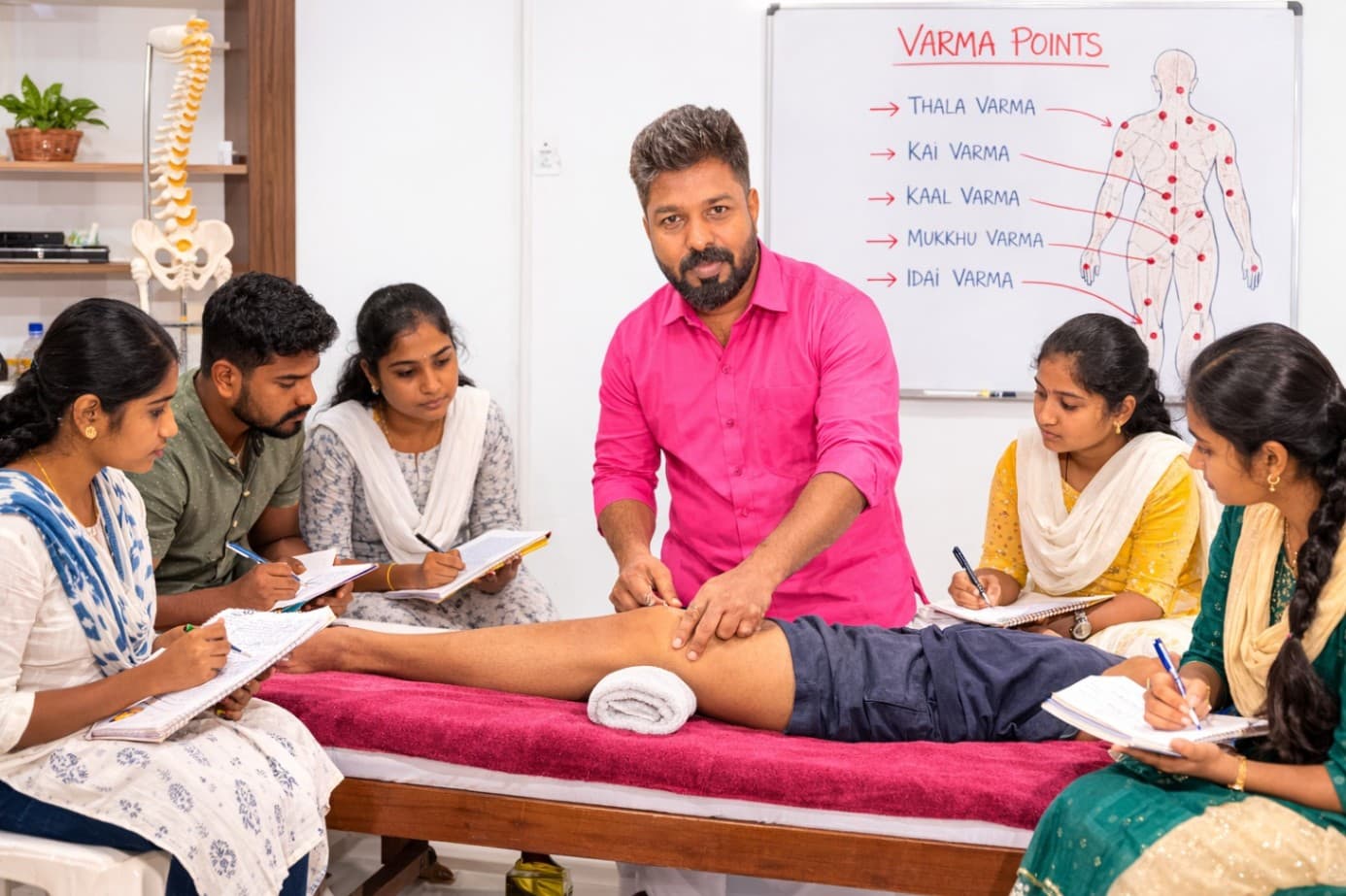
Advanced Varma Vaidyam
A deep dive into the healing side of Varmakalai: how practitioners of the tradition work with pain and the nervous system.
- Length
- 24 Weeks
- Schedule
- Mon & Wed | 7:00 PM
The Path of Transmission
From the first stances to weapon forms and the healing science: a progressive syllabus, taught in the order the lineage hands it on.
IntermediateAdvanced Varma Vaidyam
Entry LevelBeginner Varma Foundations
AdvancedTraditional Weapons Flow
01Training & certification
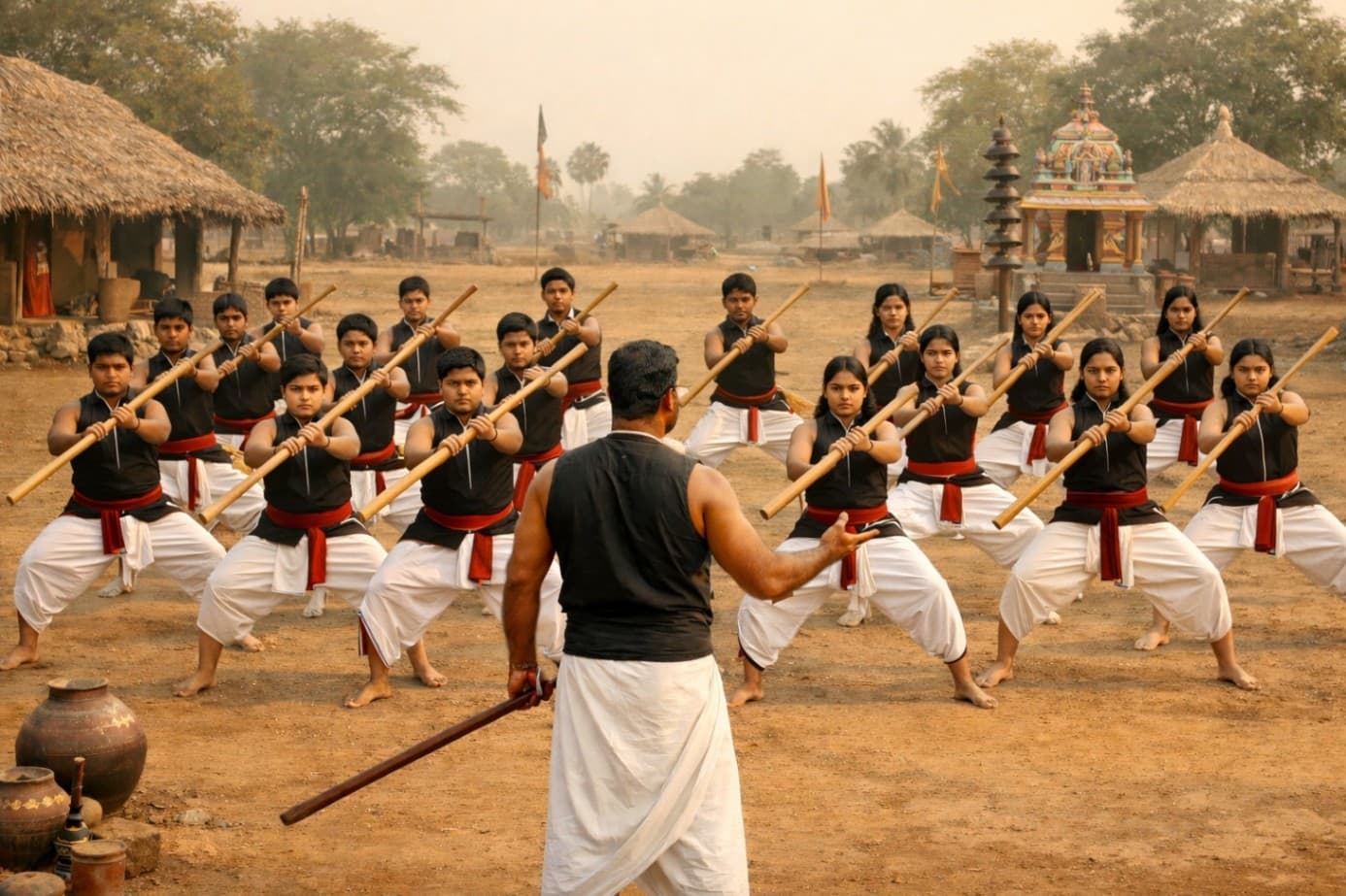
Classes teach the foundations of the Tamil martial lineage in a structured order: posture and body conditioning, basic strikes and blocks, footwork, and the terminology of the tradition. Training progresses into weapon forms (Silambam kambu, kattai), varmam study, and the deeper curriculum for those who continue.
No prior martial-arts experience is required to begin. Training is progressive, and every level is taught with emphasis on conditioning and safety before advanced practice.
Training is physical. Speak with your instructor about any existing injury or health condition before joining.
Certification follows structured, assessed study — see the certification paths on this page.
02Who it is for
Wherever you are starting from, the lineage's training begins in the same place. Here is what to expect.
No experience is needed. Everyone starts with conditioning, stances and footwork, and builds from there.
Ask the team which classes take younger students and from what age. A parent or guardian's consent is needed, and training is supervised.
The foundations are the same at any age. Tell your instructor about your fitness and health, and progress at the pace your body allows.
Trial classes are open to masters as well as students. Footwork, guards and terms differ from style to style, so experienced martial artists still begin with the lineage's foundations.
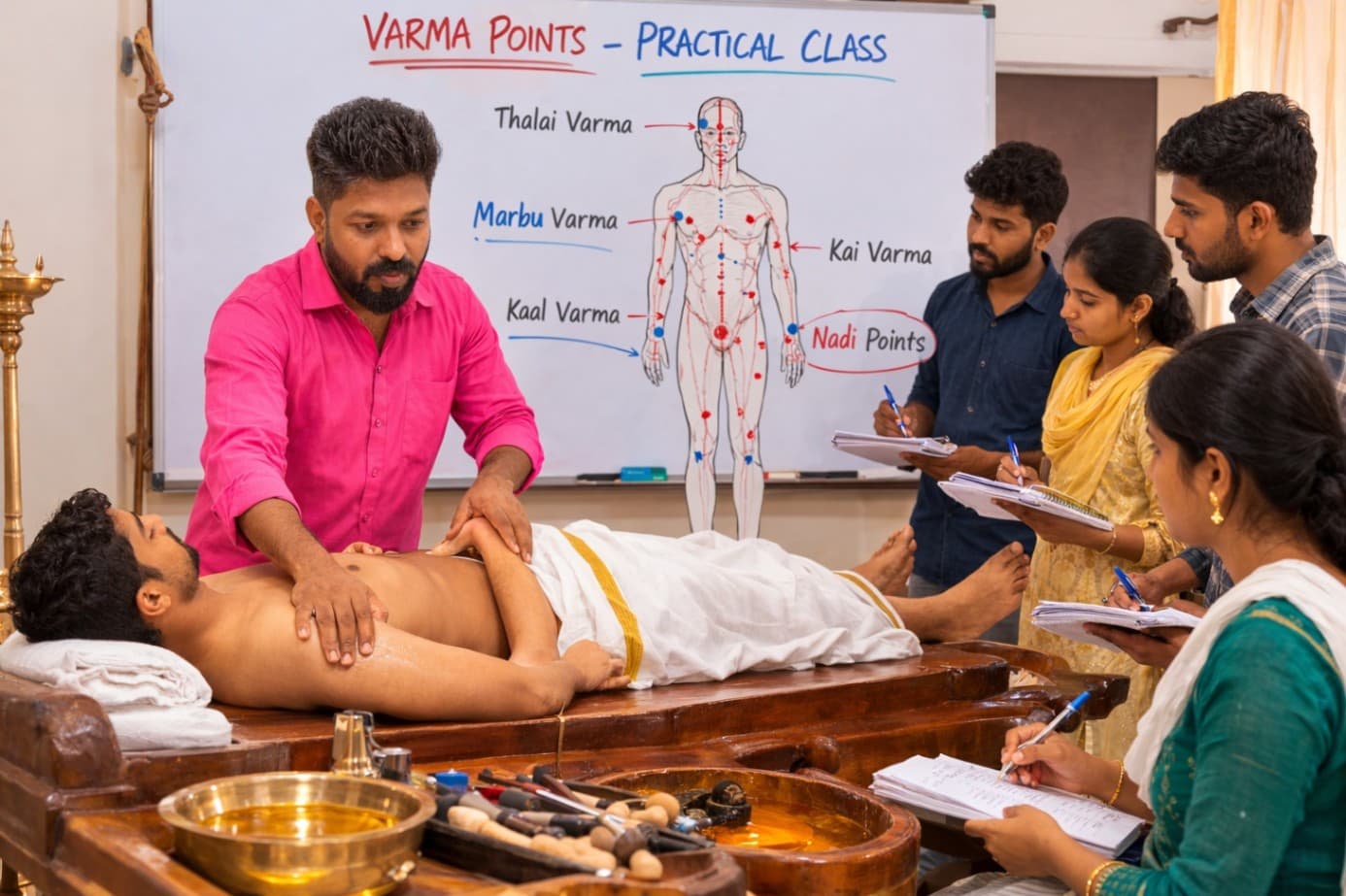
Varmam study belongs to the advanced stages of training, and Varma therapy is taught to students and masters as a course. Sessions are offered on the therapy page.
Seasonal camps concentrate training into a few days, and the Ekalaivan programme supports study between visits.
03Weekly Transmission
Regular sessions designed for consistent growth in Varmakalai and Adimurai.
IntermediateThe Science of Restoration
A deep dive into the healing side of Varmakalai: how practitioners of the tradition work with pain and the nervous system.
Entry LevelThe 12 Vital Switches
Learn the fundamental points of the upper body and their self-defence application, with conditioning and safety taught first.
AdvancedThe Extension of Prana
Train Silambam and short-stick technique, integrated with the varma points they target.
04Deep Immersions
Gurukulam-style residential deep dives into advanced Tamil martial sciences.
 RESIDENTIAL
August 15 - 20, 2026Concluded
5 days of silent practice, dawn Varma training, and nocturnal sensory awakening in the deep forest.
Western Ghats Sanctuary
 RETREAT
November 10 - 15, 2026Concluded
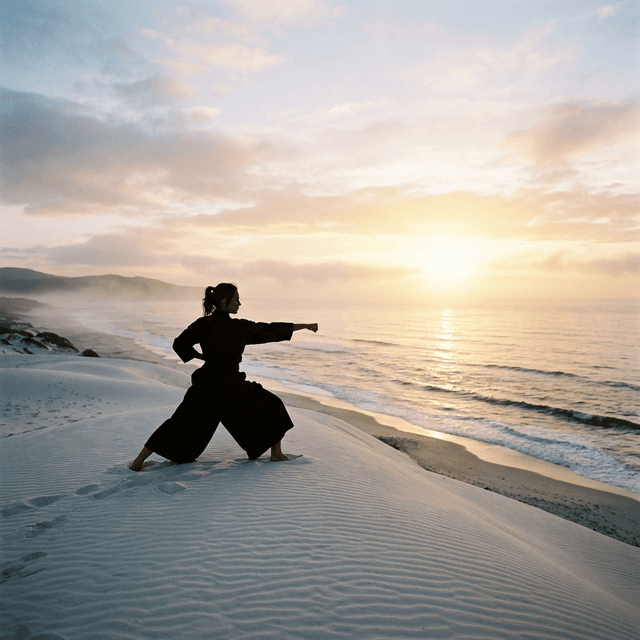
Harnessing the water element to master fluid motion and restorative coastal healing practices.
Kanyakumari Shores
05The Path to Mastery
The hierarchy of knowledge. Attain recognition through rigorous testing and lineage validation.
Level 01
Recognition of a sound working knowledge of the 108 points and their safety protocols.
Level 02
Specialisation in Varma Vaidyam, the restorative side of the science.
Not sure where to start?
Trial classes are held for students and masters. Tell us your experience and what you would like to learn, and the team will call you to confirm a batch.
06Lineage Archives
Access our secure digital archives to verify credentials and download certificates.
07The path
From the first stances to the advanced study of varmam: how Varmakalai, Adimurai and Silambam are taught at Lemuria VAWO, and how to prepare for your first class.
Training at a glance
Last reviewed
Every student starts in the same place. Early sessions are given to conditioning, stances and the footwork patterns (chuvadu) that both the staff and the empty hand depend on. It is slower than most people expect, and it is what makes everything later safe and fluent.
Trial classes are held for students and for masters (asans) of the arts. Use Book a trial class on this page, and the team will call you to confirm where and when the next trial batch meets.
Staff training moves from the grip and single strikes to spins, then to continuous sequences that join footwork, strikes and guards, and finally to partner work at a controlled pace. The kambu is chosen to the student's height — traditionally reaching about the forehead — and your instructor will advise on length and weight before you buy one.
Adimurai begins with basic strikes, kicks and blocks, drilled alone and then with a partner. Combinations, locks and escapes follow as control improves. Contact is introduced gradually and always under supervision.
The names, locations and traditional significance of the varmam belong to the advanced stages of training, and are taught with restraint to students the instructor judges ready. They are never taught as self-treatment, and never for use on someone outside training.
Seasonal camps concentrate training into consecutive days, at Thaikalam and other venues; the camps on this page show what is open now. Progress is marked by structured, assessed certification, and certificates can be verified online by TPM ID or LA number.
Silambam and Adimurai ask the whole body to work together, and steady practice shows it. Students commonly notice:
A little preparation makes the first session easier for you and your instructor.
08Glossary
The Tamil terms you will hear from your first class onwards, and what they mean.
09Questions
No. Training starts with conditioning, stances and footwork, and beginners are welcome. Tell the team about any previous training so they can suggest the right class.
Yes. Trial classes are held for students and for masters (asans). Use Book a trial class on this page, and the team will call you to confirm the place and time of the next trial batch.
Ask the team about the class you have in mind. Age requirements are set for each class and camp, so confirm the minimum age, timings and supervision before enrolling a child.
Loose, comfortable clothing you can move freely in. Bring water and a small towel, and tell the instructor about any injury or health condition before you start.
Not for your first class. Ask your instructor which length and weight suit you — the kambu is traditionally sized to reach about the forehead. The Lemuria Shop's buying guide explains how to choose one.
There is no fixed timetable. The basic strikes and spins come in the early sessions, but fluency in the sequences takes regular practice over months and years, and depends on how often you train.
Silambam trains distance, timing, footwork and awareness, which are the foundations of self-defence, and Adimurai adds empty-hand strikes, blocks and escapes. That ability comes from regular, supervised practice over time, not from a few classes.
Silambam is the Tamil art of the staff, from Tamil Nadu; Kalaripayattu is the martial art of Kerala, with its own forms, weapons and marma tradition. The two developed side by side in the far south of India and share some vocabulary, but they are taught as separate systems.
No. Varmam study belongs to the advanced stages and is taught with restraint to students the instructor judges ready. Beginners start with the foundations of Silambam and Adimurai. Varma therapy is taught separately, to students and masters, as a supervised course.
Browse the classes and camps listed on this page, then use the relevant enquiry or booking option. Confirm the location, schedule, fee and available places with the team.
The certification section on this page describes the available paths; ask the team about the syllabus, assessment and fees for the one you are considering. Issued certificates can be verified on this page by TPM ID or LA number.
Related reading